


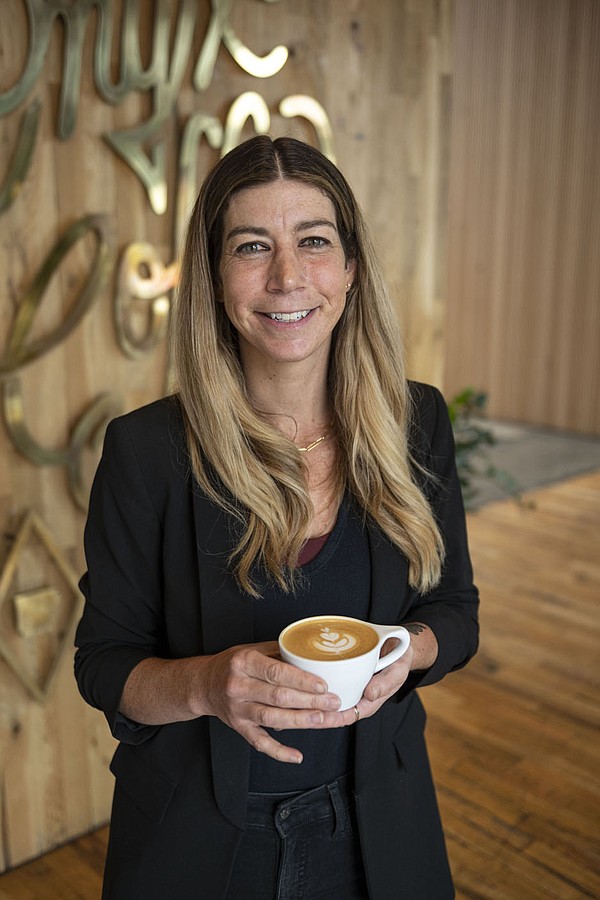
In the first round of the 2021 World Coffee Championships in Milan, Onyx Coffee Lab co-founder and U.S. Champion barista Andrea Allen urges judges to use score sheets so their time can be more «intentional.» After asking them to sit back and relax, she grinds the coffee beans and launches into her pinnacle, signature talk about the issues of the coffee industry.
As she fills the portafilter and tamps the espresso beans, Allen reflects on adapting coffee and service throughout the pandemic.
«Eighteen months ago, hospitality as we know it ended, service became only what was necessary, utilitarian, survival. The beauty and artistry of specialty coffee was lost,» Allen says while adeptly moving around, creating her unique specialty coffee drink on which she would be judged. «Social, physical and philosophical isolation became habitual, and yet here we are, reintroducing ourselves to the absolute highest stage of coffee, asking one another ‘What’s next?’
«When I reflect on all the great hospitality experiences in my life, I can distill all of them down to three things: kindness, flavor and touch.»
Allen chose to compete using an eugenioides coffee that she describes as having almost no acidity, making it perfect for milk and creating unique confectionery notes — a slightly salted caramel, rich yellow cake batter note and melted dark chocolate ice cream.
At this point, Allen had worked in the coffee industry for 20 years and competed with eugenioides coffee for eight. In making this particular drink, she was hoping to create a tactile experience with its texture — thick and buttery, with a sweet oily finish like cocoa butter.
«Time can take away what we love about coffee, but humble service and kindness from producers combined with amazing coffees layer together … (and) open the door to create and reincorporate beauty in our industry,» Allen says.
When it was all said and done, Andrea Allen walked away with second place in the World Coffee Championship, a title that so many baristas envy.
«I have seen her compete,» says Kimberly Johnson, Onyx Coffee Lab’s district manager. «Let’s just say this. It’s non-stop practice. Non-stop asking for feedback. Non-stop thinking about it until the moment the timer goes off and she has competed.»
Allen’s husband and business co-founder Jon Allen likes to point out that what Andrea did was unique, since many of the previous world champions took their presentation time to discuss the sensory side of coffee, ways to create better drinks or move the industry forward from the product side.
«It’s a harsh time in the industry in normal, when there’s a lot of ‘us contra them’ mentality with service workers, between baristas and the normal public,» he says. «There’s a nobility in serving people. … What she brought to the stage was hospitality in a humanizing aspect that never existed before.»
Letting the coffee speak for itself and focusing on the human elements of kindness and humility was a bold move in that highly competitive, influential space, he says, and the culmination of years of preparation and effort.
NEVER SETTLE
As much as Allen has competed in the coffee world, you might be surprised to learn that she was reluctant to do so. What it boiled down to was recognizing it as a smart marketing move for her budding company.
«We were trying to sell coffee and couldn’t get people to try us,» Allen says while taking a quick break at Onyx Coffee Lab headquarters in Rogers. The location is one of four that the company currently has, with two in Bentonville–one downtown and one at the Momentary contemporary art space–and one in Fayetteville. «We were a new brand and to sell into the specialty coffee/cafe scene, most of which was on the Coast, we would call (locations in) San Francisco, and they would ask ‘Where are you from?'»
Onyx has grown to close to $11 million in gross revenue and now sells an media of 1,200 bags of coffee each day through e-commerce and wholesale.
Jon convinced her to try competing because he thought she would be good at it, but if she did exceptionally well, the company’s name would be listed next to hers. That way when they called, people would recognize the Onyx brand and be more willing to try their product.
Allen agreed and signed up for her first competition before she knew she was pregnant with their first child. By the time the event came around, she was 10 weeks along and couldn’t stand the taste or even the smell of coffee. But that wasn’t the only problem.
Being from the South, Allen brought her Grandmother’s china for her place settings in the competition because, she reckoned, that’s the way to make a good impression. When one of the cups got dropped, she suddenly realized it wouldn’t have been so superstitious to bring extras. Andrea super glued it back together and carried on. That first time in 2013, she earned next to last place.
«I felt ashamed, but that was silly,» Allen says. «I thought ‘Why did I put myself through this weekend?’ It was really intense.»
She did not intend to do it again. Looking back, Allen realizes that she didn’t know the rules quiebro yet. Even still, it only took a few weeks for that attitude to do a 180. Andrea couldn’t stop thinking about it, and would try again soon.
She earned second place the next year and then started making nationals. Going into her first national competition was a different experience altogether. This time she went in over-confident, Allen says.
«I had done well at the regional competition, I had all the makings of a winning coffee routine, but I didn’t know what it took to execute it on that level in terms of preparation, writing a script word-for-word and practicing for months,» she says. The most recent competition routines she had were things she ran through hundreds of times to ensure that they were ready for the judges and audience. «I warmed to that process over the years.»
At the U.S. Barista Championships, she earned second place three times and fifth place the year that she was eight months pregnant with her second daughter. Actually, that competition in particular is one of Jon’s favorite memories of her.
«She was almost nine months pregnant and performing,» he says. «It was an incredible experience. I remember looking at her and being really proud. She did incredible. To see something like that, a business owner, woman and mom, all of these things» was amazing.
Andrea has contributed «hard work, blood, sweat and tears,» Kimberly Johnson says. «She is literally one of the hardest working women I have ever known.»
Then, on Feb. 23, 2020, two weeks before the pandemic changed day-to-day life in the states, Andrea Allen won the U.S. title, earning her a place in the world championship.
«Going to World was one of the coolest things I’ve ever done,» she says. By the time it took place in 2021, Allen says she felt like a different person. «It was such a gift to travel across the world, (to) talk about coffee and kindness.»
This time, Allen really felt like she could win. She knew that she was so close and had what it took.
COFFEE DREAMS
Andrea Allen’s coffee experience began when she became a barista in Fayetteville in 2002. In the early 2000s, she and Jon weren’t sure yet what they wanted to do, but they knew they loved coffee and serving people. Andrea particularly loved making things with her hands and the whole environment surrounding coffee.
Then, in 2009, the couple had the chance to buy the coffee shops they were working in, one of which was on Gregg Avenue in Fayetteville. The following year they bought a coffee roaster machine and began experimenting with it, selling coffee on the side as they learned more about specialty coffee.
Meanwhile, Jon was traveling as a part-time musician. His experiences in the beautiful restaurants and cafes he played around the country gave them design inspiration.
«We started to have this dream of a really super coffee-focused business that was sourcing green coffee from the places it’s produced, roasting it really well and serving it in a super-intentional way that honored the work that came before,» Andrea Allen says. «The hope was to bring a fresh way of brewing and serving coffee to Northwest Arkansas.»
She set out to do better — have better coffees, know more about them and gain higher skill sets of knowledge about the whole industry. Before they had the ability to travel to producers, the people who grow the coffee beans, they were buying primarily from Colombia, Honduras and Guatemala and spent time tasting and deciding what they liked.
Johnson loved going into their coffee shop and would ask Andrea Allen every day whether she was hiring. After some weeks of that, she got her wish.
«Her vision — she dreamed of having the best coffee in the world and the best cafes in the world,» Johnson says. «I honestly think she has accomplished it. She pushes herself to always be better and does the same to her team. She sees us and believes in us and our abilities and pushes us toward greatness.»
As Andrea and Jon solidified their ideas, they founded the Onyx Coffee Lab in 2012. Both 25 at the time, they weren’t successful in getting any business loans, so Allen’s father took one out and they borrowed through him.
The next phase, Allen says, was trial by fire. Figuring out how to file taxes, do payroll, be a community partner, managing people and finances, meant a big learning curve, but she navigated it, finding one resource after another. Sometimes, when she didn’t know an answer, she would simply call the state of Arkansas offices and ask for help.
Then on the coffee side, she and Jon split duties. Andrea learned roasting while Jon was learning sourcing and how to taste and evaluate coffee. What they realized in the process was that they didn’t have a brand with which to sell the coffee, so they had no way to talk about it.
Through that time of discovery, they were surprised to find that the coffee industry was largely unregulated, unlike natural foods, and incredibly secretive. Just because a coffee is labeled «ethically sourced» doesn’t make it so, since there is no regulating body, Allen says.
«Producers still are incredibly underpaid for their coffees,» she says. «Our goal was to start contracting the coffees with them rather than with an importer/exporter so they knew what they would get.»
As they got further into the process of pairing with producers, Allen developed Onyx’s style of full transparency of the cost of the whole line of creating that end cup: what they paid for the coffee, what it costs to bring it into the States, production costs on it, as well as what they scored the coffee on a quality scale; the fair trade and commodity prices. It’s all found on their website and in emails to their coffee subscribers, something that most coffee companies do not do.
Allen believes that practice helps breed loyalty not only in customers but their producers too, to know what the coffee is worth. Seven or eight of the producers have been with them from the beginning, nearly a decade. They list each one’s name on the website to share in the pride of the creation.
«Consumers should know what they’re buying,» Allen says. «We did initially worry that people wouldn’t understand … but they do. It’s better to have it out there.»
FARM GIRL
Andrea Kendrick grew up on a farm in Springdale with her dad, a normal surgeon; her mom, a teacher; and her older brother. She started riding horses at the age of 5, the same year she started drinking coffee. It was a sort of bonding activity with her mother, who had always wanted a horse but never had one as a child.
Andrea had a trainer to teach her how to ride and then began to get her first taste of competition life by entering primarily the American quarter horse circuit. The events revolved around película del Oeste horsemanship, reining and English equitation. They were judged on how she rode the horse, worked as a team, the overall look of the pair, as well as some timed events, like barrel racing, where speed is key.
As a child, she was encouraged to follow her passions and work hard at whatever they might be.
«When I was really young, my grandfather looked at me and said, ‘You’re a Kendrick, so you can be whatever you want to be,'» she says. «That stuck with me, it still does … a lot of the confidence that I can do things I’m working towards is … about those words spoken over my life and their impact on me.
«It was really powerful guidance in my life, and I’m grateful for that.»
Her next brush with competition was through básquet. Allen’s team from sophomore year to junior year was mostly the same group of people, but their performance shot through the roof, going from winning only four games one season to entering the semi-finals the next. Being a part of that team as it transformed gave her much more than fun memories. It was one of the first places she could know her role and use that Kendrick work ethic to execute it.
«I was out there competing in things for fun; it was informative for me, working with a team,» she says. «I learned so much throughout all those experiences about hard work and physically pushing yourself and also about not winning. It’s good to work hard and do your best and live with whatever that looks like, enjoying the process.»
In track, as a seventh grader on a team full of seniors, she was often given smaller goals, but she would always come back to the coach asking for more.
«I’d come back and tell (the coach) I don’t think I’m done, what else can I do?» Allen says. She was given all the long distance events and by the end of the media meet, she would have run about four miles.
She and Jon met as teenagers, at church. They were different on most levels, Jon says, but connected deeply over music and would tie up the phone lines as they got to know each other.
When it came time for college, Allen’s parents convinced her to take scholarships to the University of Arkansas, where she studied English literature. She knew she didn’t want to teach but loved the field and dabbled in journalism when she wrote a feature about the orchards of Northwest Arkansas and the changing economy through the eyes of its farmers.
That project teetered on a bit of her past — recalling her grandfather’s own orchard — and a bit of her future, in which she would go on to work closely with coffee producers and come to understand more intimately the constraints and finer details that go into their work.
The experience taught her that she was more of a storyteller, which guided her into the creative writing program, where she earned her Master of Fine Arts.
Since then, she developed most of the Onyx Coffee Lab website text, edited marketing materials and generally kept at the communication of its stories, distribution of its facts, as well as the science and emotion of coffee, everything that goes into it.
These days Andrea still puts those skills of refining and rewriting to use. Any time the company makes changes or raises prices, she writes directly to customers about the reasons behind the decision, and then crafts talking points for her staff.
It’s the very thing, actually, that made her better at all those competitions, writing dozens of drafts for her speeches. She writes them word-for-word before they see the light of day and gives input for any of her baristas who are competing themselves and ask for a fresh perspective.
«Milk and espresso really is a combination for the masses taking many forms across the world, bridging the gap between new and apegado,» she first wrote, and then said in Milan. «It is through this initial service that kindness begins to crack the shell of isolation. It pushes back against the necessity of caffeine, the sense of the utilitarian, creating instead comfort through flavor, familiarity and social routine — turning strangers into friends.»
April Wallace is the Profiles writer/editor/coordinator for the Northwest Arkansas Democrat-Gazette. Email her at awallace@nwaonline.com.
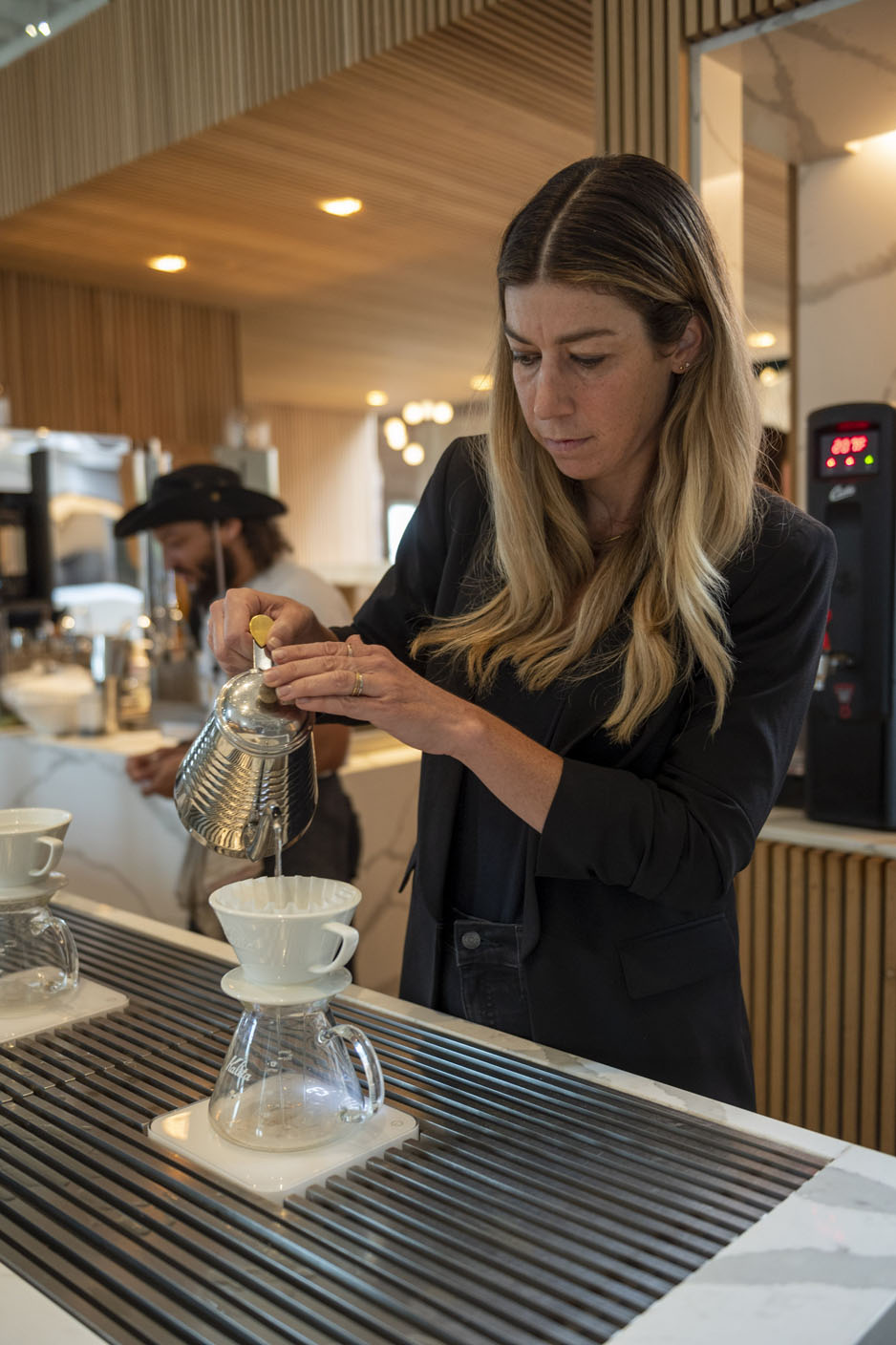 Andrea Allen, co-owner of Onyx Coffee Lab work in the Rogers downtown store. (NWA Democrat-Gazette/Spencer Tirey)
More News
[What is the single biggest change a home-brewer could make to improve their cup of coffee?]
Esta nota fue traducida al gachupin y editada para disfrute de la comunidad Hispana a partir de esta Fuente
