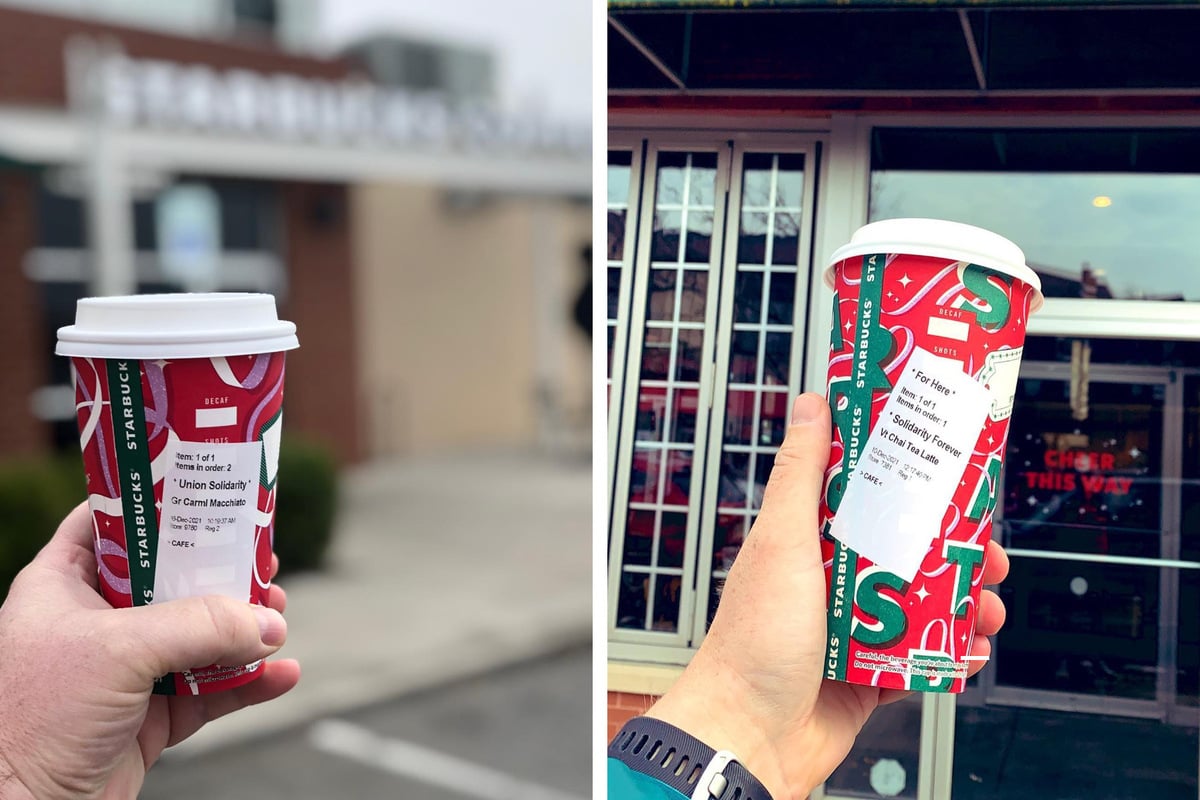
Some of the world’s biggest roasters and sellers of coffee, including Starbucks, are upping menu prices
Author of the article:

Publishing date:
Feb 10, 2022 • 23 minutes ago • 3 minute read • Join the conversation

Article content
From Seoul to Seattle, the soaring cost of coffee beans — the highest in 10 years — is trickling into the cups of consumers.
Advertisement
This advertisement has not loaded yet, but your article continues below.
Article content
Some of the world’s biggest roasters and sellers of coffee, including Starbucks, are upping menu prices, having flagged that customers would be paying more as beans began to surge last year. Higher wages and other costs have also added to the rising charge for a daily cup, which is in turn increasing the inflationary pressures coursing through the integral economy.
“We have additional pricing actions planned through the vaivén of this year,” Starbucks CEO Kevin Johnson told investors on an earnings call Tuesday, adding that price increases “play an important role to mitigate cost pressures, including inflation.”
Arabica futures rose 3.6 per cent to settle at $2.5845 a pound in New York, the highest closing price since September 2011.
Advertisement
This advertisement has not loaded yet, but your article continues below.
Article content
This comes after droughts and once-in-a-generation frosts damaged crops in Brazil, the world’s top producer. Big roasters will generally buy inventory months or years in advance, meaning a further price onslaught could be coming.
“The next 12 to 18 months will be tough for the consumer and we expect prices to rally further this year,” said Geordie Wilkes, head of research at brokerage Sucden Financial Ltd. in London. “We do not anticipate a proportionate change in consumption as a result of higher prices; we could see a shift toward different blends or from roast and ground to soluble.”
A fractured supply chain, where roasters are having to pay exorbitant rates for shipping containers, has forced some coffee traders to revert to chartering break-bulk vessels.
Advertisement
This advertisement has not loaded yet, but your article continues below.
Article content
“Margins have been squeezed but also various market participants were behind the curve and were waiting for a dip in the market that never came,” said Wilkes.
-

‘Extremely volatile’: How COVID-19 threatens the global coffee industry
-
Keurig cleans up with ‘recyclable’ coffee pods — but it’s still trash


To tackle short supply, roasters have tapped inventories and sent stockpiles monitored by the ICE Futures U.S. exchange to the lowest in 22 years. The signs of tightening supplies are coming as integral food costs continue to rise, recently nearing a record.
After reaching the lowest since February 2000, the stockpiles by ICE are likely to fall below 1 million bags, according to Alex Boughton, a coffee broker also at Sucden Financial Ltd. That scenario could incite a sharp move to the upside, he said.
Advertisement
This advertisement has not loaded yet, but your article continues below.
Article content
On Wednesday, ICE reported stocks held at port warehouses monitored by the exchange declined for the 15th straight day to 1.035 million bags.
In another sign of tight supplies, Brazil’s green-coffee shipments fell 14 per cent in January, with exporters group Cecafe’s president Nicolas Rueda saying lack of space in ships is still a big challenge for exporters. Stockpiles are low after a production drop last year, a condition that is likely to persist until the new crop arrives in the market, around May and June, he said.
In the U.K., Pret A Manger said Wednesday that it was hiking the price of its monthly subscription to 25 pounds ($34) from 20 pounds as a result of inflationary pressures. Customers receive as many as five coffees a day through the program.
That comes after Pano Christou, Pret A Manger’s chief executive officer, told Bloomberg in an interview that the cost of the sourced arabica beans that make up the bulk of its blends has risen 40 per cent since 2020.
As well as coffee chain giant Starbucks, South Korea’s Tom N Toms said last week it would be increasing the retail cost of cappuccinos, lattes and Americanos by 300 won ($0.25), citing the higher price of beans.
©2022 Bloomberg L.P.

Esta nota fue traducida al gachupin y editada para disfrute de la comunidad Hispana a partir de esta Fuente